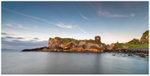
The Cottage by the Bay, Port Moon (IMG0819)

Fishermen of the Causeway Coast have harvested the Atlantic Ocean for centuries, rathering kelp from the shore, fishing crabs, lobsters in pots or creels in the bay, hooking cod or plaice on baited long lines in the deep ocean and catching Atlantic Salmon in nets fixed to the rocks below.
From around 1830 bagnets were fastened to rocks in the bay intercepting salmon as they neared the end of their epic migration from the far reaches of the Atlantic Oceon to The Bush, the river of their birth for spawning.
The maritime archaeology of Port Moon remains scattered around the bay, stone walls for drying kelp, wooden poles for hanging up salmon nets to dry, a rusty winch for hauling boats out of the water, an ice house for storing the fish before going off to market and the Fish House, the nerve centre of fishing operations in Port Moon for the last two hundred years.
The stone walls of the Fish House previded storage for the equipment and shelter from the elements for the fishermen between working the nets and carrying heavy crates of salmon up the cliff.
From around 1830 bagnets were fastened to rocks in the bay intercepting salmon as they neared the end of their epic migration from the far reaches of the Atlantic Oceon to The Bush, the river of their birth for spawning.
The maritime archaeology of Port Moon remains scattered around the bay, stone walls for drying kelp, wooden poles for hanging up salmon nets to dry, a rusty winch for hauling boats out of the water, an ice house for storing the fish before going off to market and the Fish House, the nerve centre of fishing operations in Port Moon for the last two hundred years.
The stone walls of the Fish House previded storage for the equipment and shelter from the elements for the fishermen between working the nets and carrying heavy crates of salmon up the cliff.

|

Also in: County Antrim
 |  |  |  |  |
 |  |  |  |  |
 |  |  |  |  |